

Why This Matters to You
If you’re responsible for growth or operations, you’re likely dealing with real pressure:
- Orders still arrive by email, PDF, or phone
- Systems don’t talk to each other
- Teams re-enter data and work around problems
- Past digital projects didn’t deliver what was promised
The risk isn’t just technical. It’s operational. It affects your people, your customers, and your confidence in decisions.
Our job is to help you modernize without breaking what already works.
Our job is to help you modernize without breaking what already works.
What You'll Learn in the B2B eCommerce Blueprint
This book explains what actually needs to happen for B2B eCommerce to work — and in what order. You’ll learn how to avoid common failure points, reduce risk before investment, and make decisions your teams and customers won’t push back on later.
The goal isn’t to launch faster. It’s to build a digital channel customers trust, adopt, and return to.
The goal isn’t to launch faster. It’s to build a digital channel customers trust, adopt, and return to.

Working with your ERP, CRM, and internal systems

Designing buyer portals and ordering experiences

Reducing manual work and operational friction

Helping teams adopt new digital workflows

Why This Feels Hard
We start with what’s already in motion — your systems, your teams, and the decisions you’ve already made. Past investments become context.
We apply the Blueprint’s structure to your reality, making decisions based on how your business actually operates, not generic benchmarks or best-practice templates. Clarity and alignment come first. Speed follows when it’s earned.
The sequence matters. And Groove owns applying it.
We apply the Blueprint’s structure to your reality, making decisions based on how your business actually operates, not generic benchmarks or best-practice templates. Clarity and alignment come first. Speed follows when it’s earned.
The sequence matters. And Groove owns applying it.
Clients often describe the experience this way:
Clients often describe the experience this way:
- Calm and intentional
- Structured without being rigid
- Opinionated when it matters
- Respectful of how they actually operate
This isn’t about urgency or pressure.
It’s about making the right decisions in the right order.
It’s about making the right decisions in the right order.
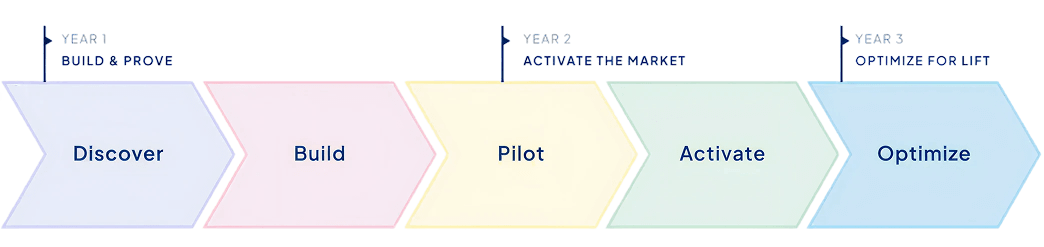
How Engagements Are Sequenced
How We Reduce Risk Before It’s Expensive
Most digital risk comes from moving forward without enough clarity.We reduce that risk by:

Testing assumptions early before rollout

Validating solutions with real users

Aligning work with how teams actually operate

Measuring success everyone agrees on

“We finally had confidence we weren’t creating problems downstream. Groove helped us slow down at the right moments and move faster where it mattered.”


“This wasn’t a portal launch. It was a system we could trust. Groove understood how our business actually operates—and built around it.”

“For the first time, sales, IT, and operations were aligned around one plan. That alignment changed how decisions got made.”
